
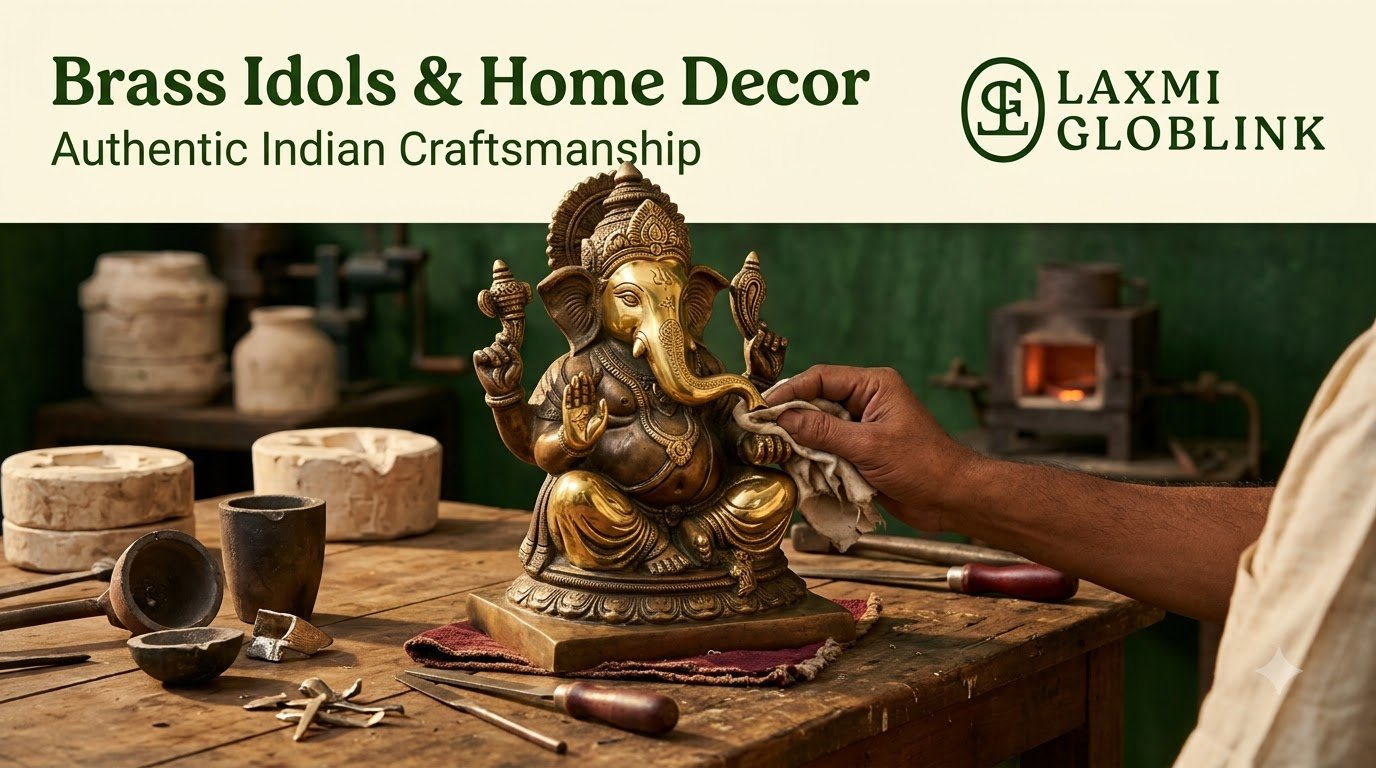
Brass Idols & Home Decor: A Guide to Authentic Indian Craftsmanship
Brass idols wholesale from India covers a wide range of quality — from mass-cast pieces with thin walls and rough finishing, to hand-finished idols made through traditional lost-wax casting with GI-backed authenticity. The difference shows up in weight, detail, and how the piece holds up over years on a shelf. Knowing what separates the two before you order saves you from a container full of pieces that don’t match your buyers’ expectations.
We’ve worked in brass and copper for 25+ years, and we’ve supplied idols and home decor pieces to 1,000+ interior design clients through a network of 20+ artisans. This guide walks through what to check before you commit to a brass idol supplier.
Table of Contents
- Why Casting Method Determines Quality
- Reading Finish, Weight, and Detail Correctly
- GI Tags and Why They Matter for Authenticity
- Popular Idol Categories for Retail
- MOQs, Customization, and Packaging
- FAQ
Key Takeaways
- Lost-wax casting produces finer detail and consistent weight; sand casting is faster but less precise.
- A genuine brass idol feels notably heavier than a lighter alloy piece of the same size.
- GI tags on specific brass craft clusters confirm the piece comes from a verified regional artisan tradition.
- Ganesh, Krishna, and Balaji idols remain the strongest sellers across US, UK, and Australian retail.
- Ask for individual packaging specs, since brass idols dent and scratch more easily than you’d expect in transit.
Why Casting Method Determines Quality
Most brass idols come from one of two casting methods: lost-wax casting or sand casting. Lost-wax casting builds a wax model first, then casts brass around it before melting the wax away. This produces finer facial and drapery detail, and it’s the traditional method behind most temple-quality idols.
Sand casting works faster and costs less, but it loses some of the fine detail lost-wax casting captures. Neither method is wrong for every buyer — a decorative piece for casual retail doesn’t need the same precision as a premium interior design placement. What matters is knowing which method your supplier uses, and pricing accordingly.
Reading Finish, Weight, and Detail Correctly
A genuine, well-cast brass idol feels heavier than you’d expect for its size. Lighter-weight pieces often use thinner walls or a lower-brass alloy mix, which cuts cost but also cuts durability.
Check the finish closely too. Antique or oxidized finishes should look even across the piece, not patchy. Polished finishes should show clean lines at the joins, not visible seams from the casting mold. If you can, request a sample before a bulk order — photos rarely show these details clearly.
GI Tags and Why They Matter for Authenticity
Several brass craft clusters in India carry Geographical Indication (GI) status, which certifies that a piece comes from a specific traditional region using recognized techniques. For buyers marketing “authentic Indian craftsmanship,” a GI tag gives you something concrete to point to, rather than a general claim.
Ask your supplier whether their idols come from a GI-recognized cluster, and request documentation if authenticity matters to your positioning. Not every good brass idol carries a GI tag, but if authenticity is central to your brand story, this is worth confirming upfront.
Popular Idol Categories for Retail
Ganesh idols remain the most consistently requested piece across our buyer base, likely because of their broad decorative and gifting appeal beyond religious use. Krishna and Balaji idols follow closely, particularly with buyers who serve a South Asian diaspora market alongside general interior design clients.
Beyond idols specifically, brass home decor — bowls, candle stands, decorative boxes — pairs well in a retail line alongside idols, since buyers often want a mix of statement and everyday pieces.
MOQs, Customization, and Packaging
Brass idol MOQs vary by size and casting complexity — smaller idols typically carry lower minimums than large statement pieces. Most suppliers can adjust size, finish, and base design within a workable range.
Packaging matters more with brass than buyers often expect. Idols dent and scratch in transit if not individually wrapped and boxed. Ask specifically how your supplier packs each piece, not just how they pack the shipment as a whole.
FAQ
How can I tell if a brass idol is genuinely handcrafted?
Check for consistent weight, clean finish lines at the joins, and fine facial or drapery detail. Ask your supplier which casting method they use — lost-wax typically indicates higher craftsmanship.
What’s a typical MOQ for brass idols wholesale?
It depends on size and casting complexity. Smaller idols usually carry lower minimums than large statement pieces. Confirm the number per design with your supplier.
Do GI tags apply to all brass idols from India?
No. GI status applies to specific traditional craft clusters, not the entire brass industry. Ask your supplier directly if a GI tag applies to the pieces you’re sourcing.
Which idol designs sell best for international retail?
Ganesh idols see the most consistent demand, followed by Krishna and Balaji designs, especially where buyers serve both general and South Asian diaspora markets.
How should brass idols be packaged for export?
Each piece should ship individually wrapped and boxed to prevent dents and scratches. Confirm your supplier’s packaging process before placing a bulk order.
Ready to add authentic brass idols to your line? DM us to request a brass idol price list, or visit www.laxmigloblink.com to browse current designs.
https://laxmigloblink.com/how-to-import-handicrafts-from-india/
https://laxmigloblink.com/brass-utensils-for-retail/
https://laxmigloblink.com/how-brass-handicrafts-are-made/