
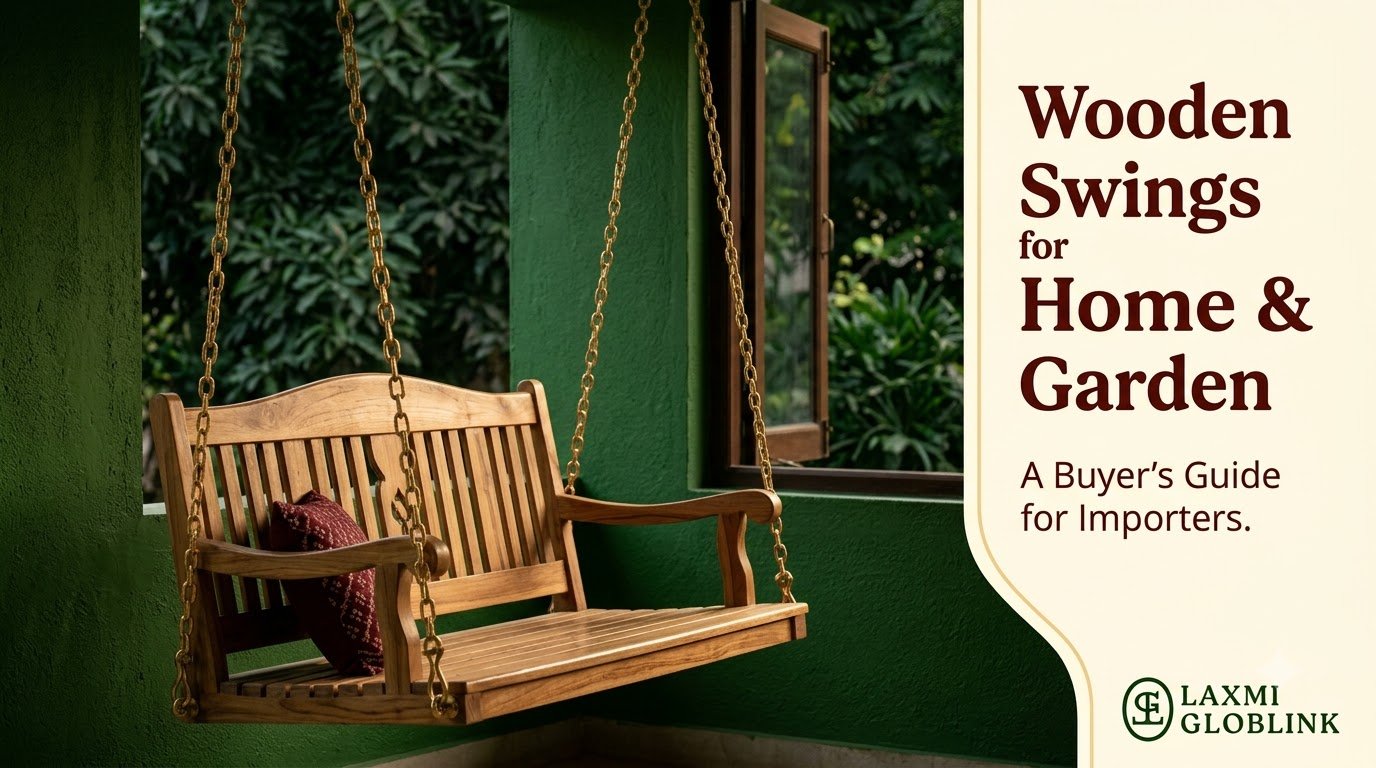
Wooden Swings for Home & Garden: A Buyer’s Guide for Importers
A wooden swing, or jhula, is a solid-wood seating piece hung from chains or ropes, traditionally used in Indian homes and now sought after abroad for patios, verandas, and statement interiors. Buying wooden swing wholesale from India means choosing the right wood type, frame construction, and finish for your market, then confirming MOQs and shipping specs before you commit to an order. Get those choices right upfront, and you avoid the two most common problems buyers hit later: a swing that doesn’t survive an outdoor climate, or a container that costs more to ship than expected.
We’ve supplied wooden pieces to 1,000+ interior design clients and worked with artisan clusters across India for 25+ years. This guide covers what actually matters when you’re sourcing swings for retail or design placement.
Table of Contents
- What Makes a Wooden Swing “Export Grade”
- Choosing the Right Wood for Your Climate
- Indoor vs. Outdoor Swing Construction
- MOQs, Lead Times, and Customization
- Shipping and Packaging Considerations
- FAQ
Key Takeaways
- Teakwood and mango wood suit outdoor use best; other woods work well for indoor-only pieces.
- Chain and hook hardware matters as much as the wood — check weight rating before you order.
- MOQs for swings usually run smaller than for smaller decor items, since each piece takes more material and labor.
- Confirm whether your supplier offers knock-down (flat-pack) construction — it changes your shipping cost significantly.
- Ask for a finish sample, not just a photo, since natural wood grain varies piece to piece.
What Makes a Wooden Swing “Export Grade”
An export-grade wooden swing holds up to temperature and humidity swings during transit, then performs in a climate that may be very different from where it was made. That means kiln-dried wood, weather-resistant joinery, and hardware rated for the swing’s weight. A swing that looks finished in a workshop photo can still crack or warp in transit if the wood wasn’t dried properly first.
Ask your supplier directly about moisture content at the time of shipping. A reliable manufacturer will know this number, not guess at it.
Choosing the Right Wood for Your Climate
Different woods suit different end uses. Teakwood handles outdoor exposure well because of its natural oils and density. Mango wood works for both indoor and covered-outdoor pieces at a lower price point. Sheesham (Indian rosewood) offers strong grain character but performs best indoors or under cover.
If your buyers plan to use the swing outdoors year-round, specify teakwood or ask your supplier for a weatherproofing treatment on other wood types. Don’t assume “wooden swing” automatically means outdoor-ready — confirm the wood and finish match the use case.
Indoor vs. Outdoor Swing Construction
Indoor and outdoor swings differ in more than wood choice. Outdoor swings need rust-resistant chains or ropes, weather-sealed finishes, and joinery that won’t loosen with humidity changes. Indoor swings can use decorative hardware and lighter finishes since they don’t face the same exposure.
Tell your supplier upfront which category you’re ordering, since the construction — not just the look — changes based on the answer.
MOQs, Lead Times, and Customization
Wooden swings generally carry lower MOQs than smaller decor items, since each piece uses more raw material, labor, and finishing time. Lead times run longer too, particularly for hand-carved or custom-sized swings.
Most Indian manufacturers can customize seat width, chain length, finish, and carving detail within a reasonable range. Ask about knock-down construction — flat-pack swings that assemble on arrival — since this can cut your shipping cost meaningfully compared to a fully assembled frame.
Shipping and Packaging Considerations
Wooden swings take up real container space, and packaging quality directly affects whether they arrive undamaged. Ask your supplier how they pack the frame, seat, and hardware separately, and whether they use corner protection for the joinery.
If you’re ordering a mixed container with other wooden pieces — temples, wall panels, statues — plan the packing layout with your supplier in advance rather than leaving it to the last stage.
FAQ
What wood works best for outdoor wooden swings?
Teakwood handles outdoor exposure best due to its natural density and oils. Mango wood works for covered outdoor or indoor use at a lower price point.
What’s a typical MOQ for wooden swing wholesale orders?
MOQs run lower than for smaller decor items, since each swing uses more material and labor. Confirm the exact number with your supplier per design.
Can I customize the swing’s size, chain length, or finish?
Yes. Most manufacturers adjust seat width, chain length, finish, and carving detail within a workable range. Share your specifications early to avoid delays.
Do wooden swings ship assembled or flat-pack?
Both options exist. Flat-pack (knock-down) construction often reduces shipping costs. Ask your supplier which option fits your order size and destination.
How do I know the swing will survive my local climate?
Ask about wood type, moisture content at shipping, and finish treatment. A supplier who can answer specifically, rather than vaguely, is one worth working with.
Looking to add wooden swings to your product line? DM us to request wooden swing pricing, or visit www.laxmigloblink.com to see current designs.